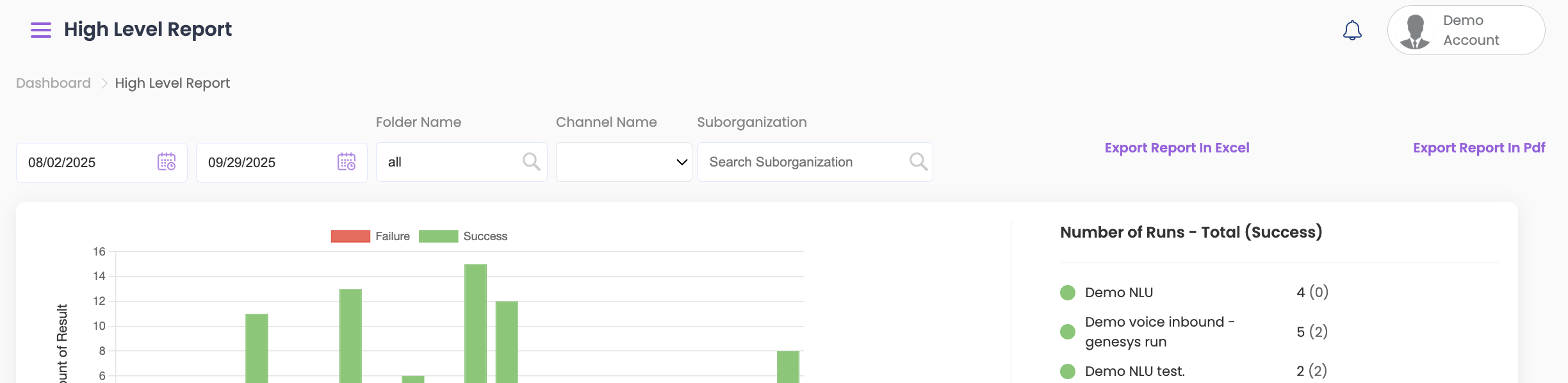
The High-Level Report summarizes all test results, displaying success/failure rates and execution history. Filters are available by date, folder, channel, and sub-organization.
Viewing and Filtering Overall Results #
- Select the start and end dates from the top to view the testing results.
- To further filter by folder name, channel name, or sub-org, select the required option from the dropdown.
- For the selected date range, you can graphically see the number of sprints run and the number of times the sprint has been successful and/or failed.
- To filter specific reports of sprint folder tests and/or channels, select the required Folder Name, Channel Name, or Sub-Org Name from the dropdown list.
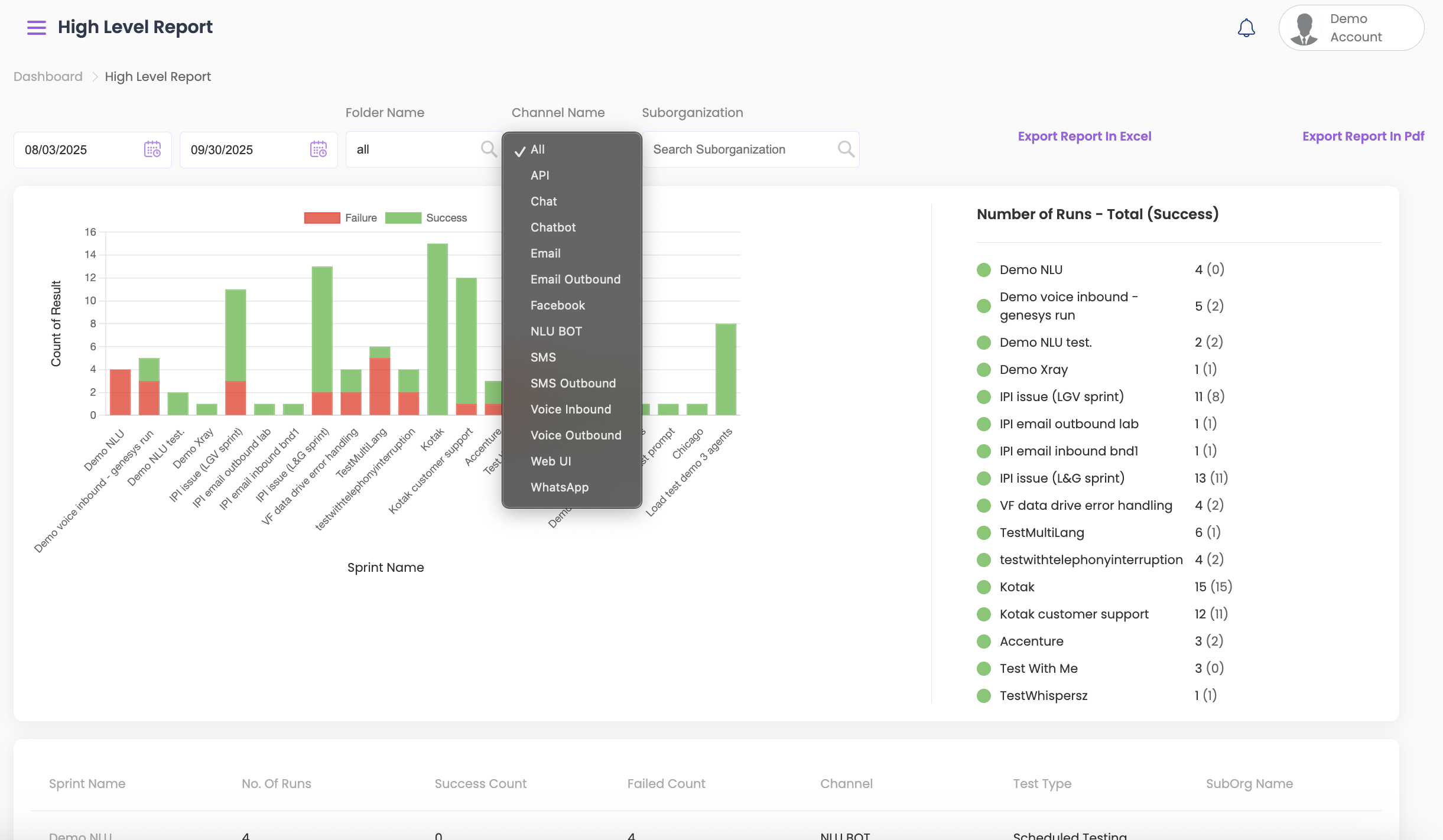
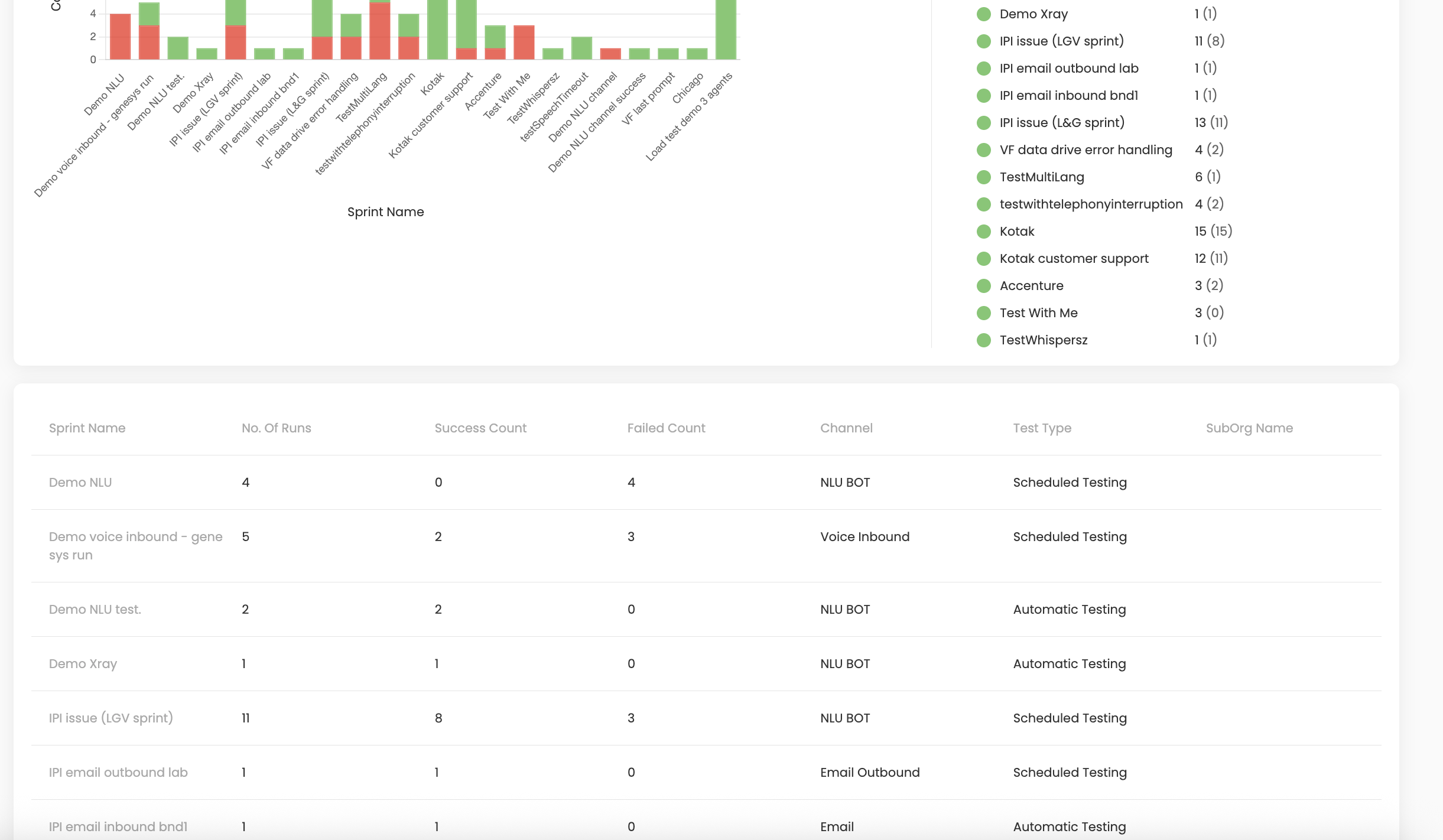
- Below the graphs, the following information is displayed:
- Sprint Name
- Number of times the sprint has run
- Sprint’s success and fail count
- Channel type and test type
- Sub-org name, if it is part of any
Viewing Individual Sprint Results #
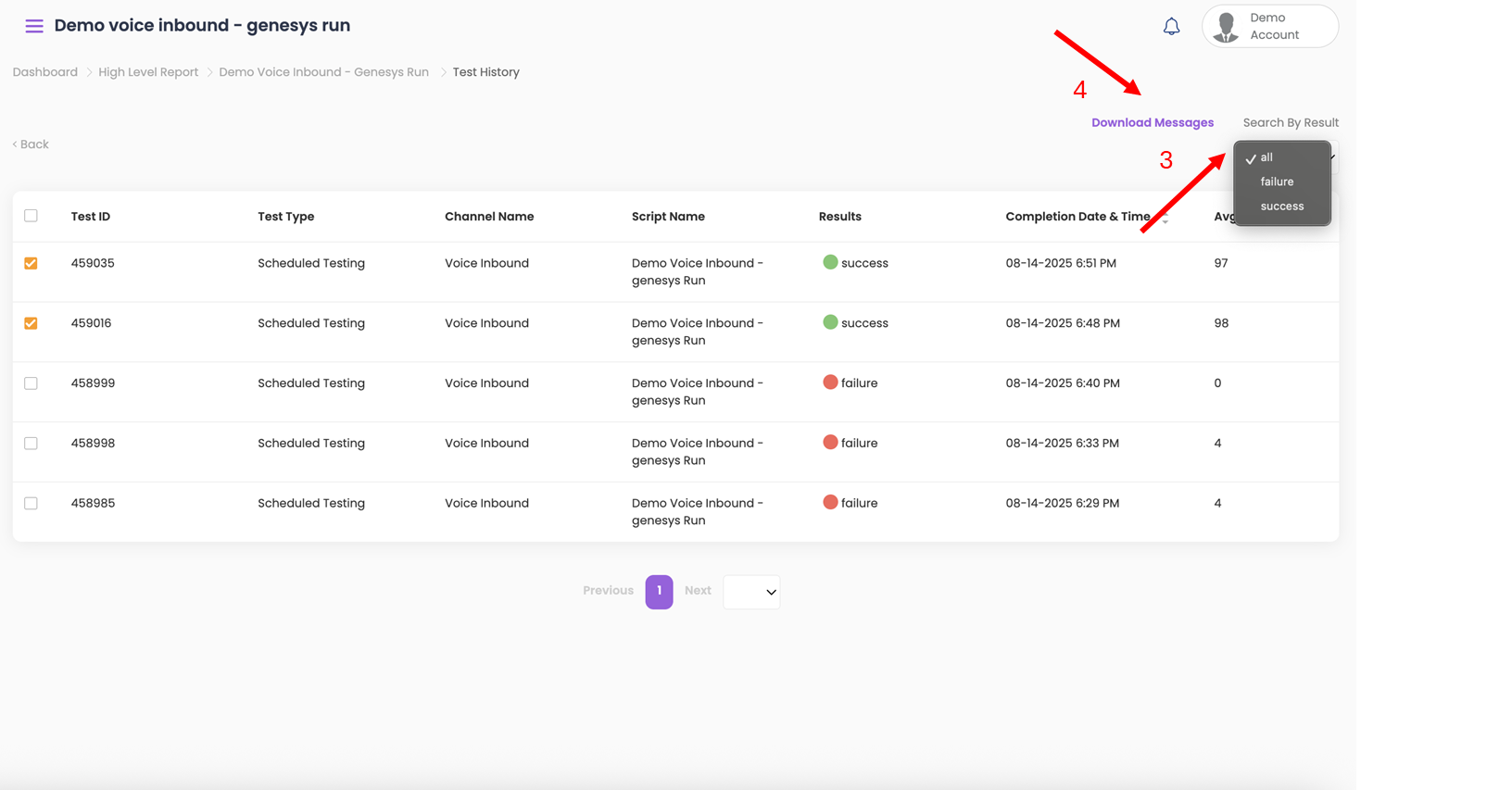
- To view individual results of a sprint’s execution, click on the required Sprint Name.
- You will be redirected to another page showing:
- Test ID
- Test type (automated or scheduled)
- Channel name and script name for reference
- Results, Completion Date & Time, and Average Confidence for each sprint in the selected date range
- To filter by failure/success/all results, click on Search by Result on the top-right corner and select from the dropdown menu.
- You can also select checkboxes to download the tests.
Test History and Test Analysis #
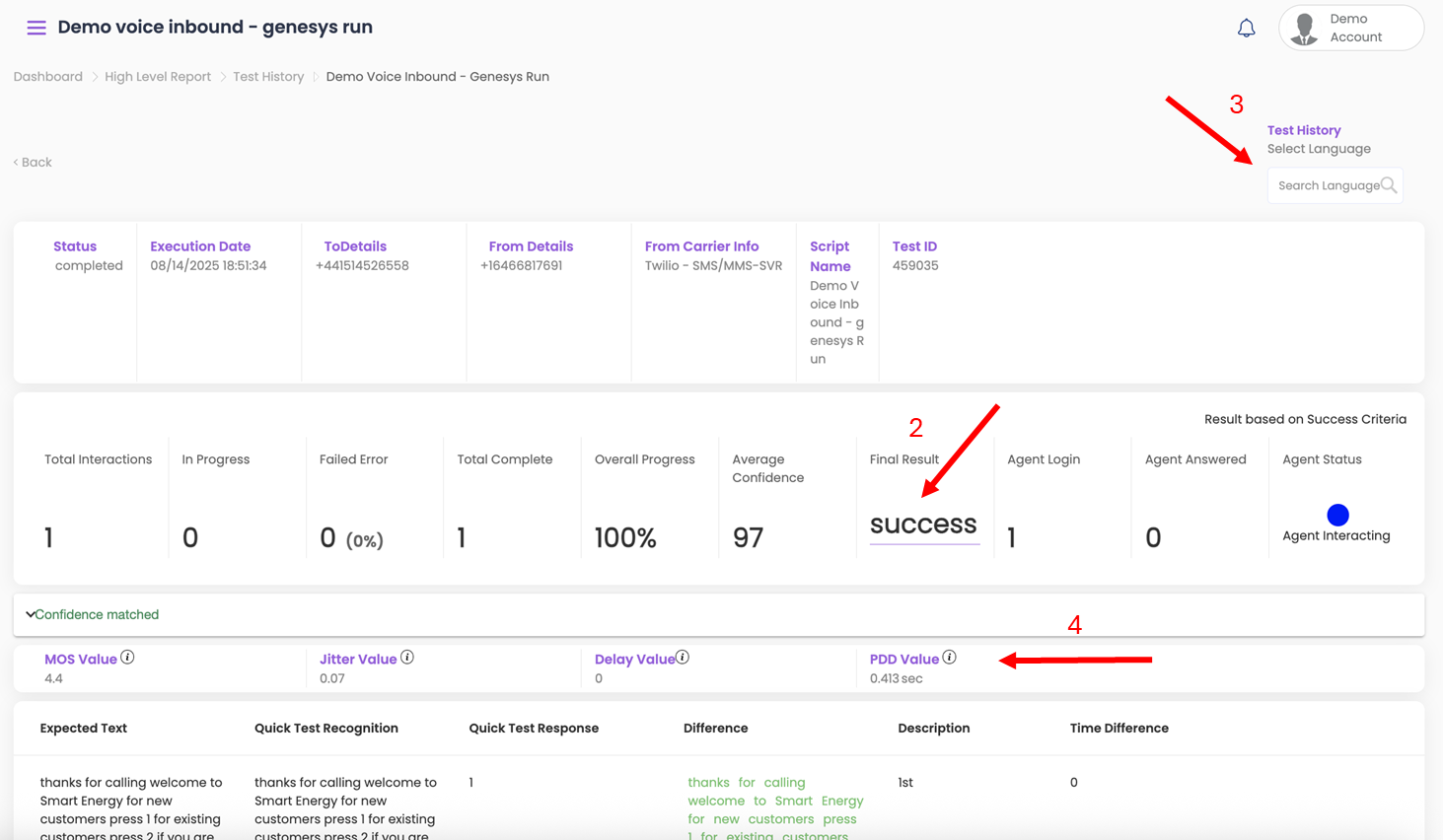
- To view the test history of any test result, click on Test ID. A detailed report of the sprint will be displayed including:
- All prompts and their status
- Execution date & time
- To/From details, carrier info, script name, and Test ID
- Click on Success/ Failure under Final Result to view the reason for sprint failure (based on not meeting the selected success criteria).
- You can convert test results from one language to another (e.g., English to Spanish) using the Select Language dropdown.
- You can also view call quality details such as:
- MOS value – Audio quality rating (1–5); higher scores indicate clearer audio
- Jitter value – Measures inconsistency in audio packet arrival; high jitter can cause choppy or distorted audio
- Delay value – Time taken for audio to travel between participants; high delays can cause interruptions
- PDD – Time between dialing a number and the call ringing; lower PDD means faster call setup
Additional Actions #
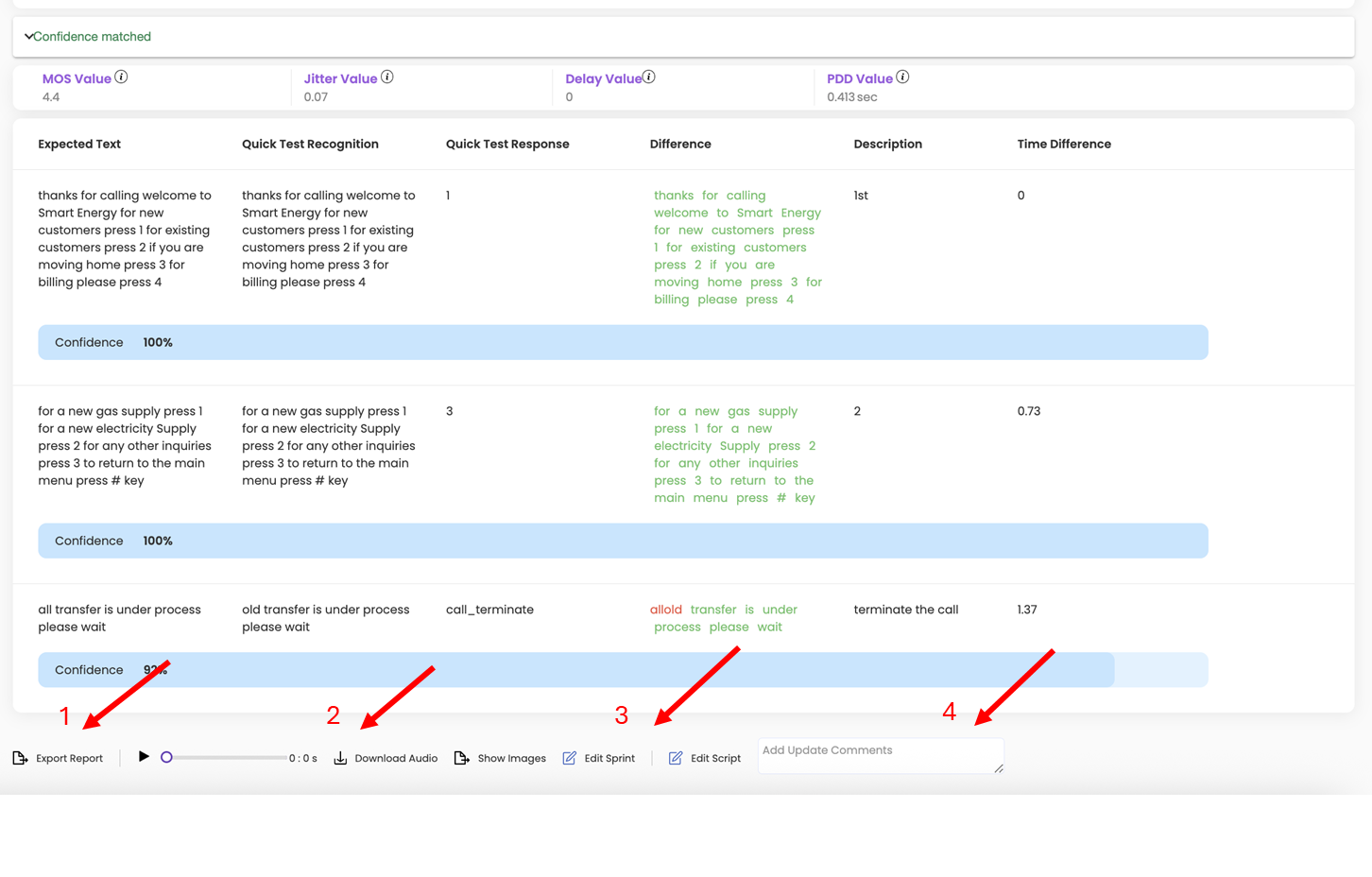
- Download test results using Export Report.
- Play audio recordings via Listen Audio or download them via Download Audio (voice channels only).
- Edit the sprint or script directly without manually searching for the test.
- Add or update comments for team reference and visibility.
Download Options #
The High-Level Summary report can be exported as PDF or Excel for offline review.